








The Double Meaning of Communion
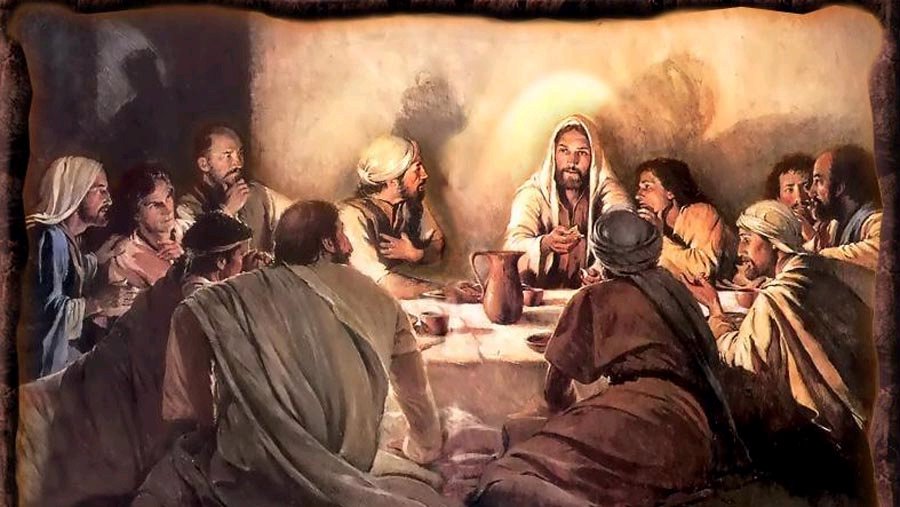
.... In our previous posting we discussed the meaning of the Lord’s supper. It is a memorial to our Lord Jesus who gave Himself on the cross for our sins. The sacrament of bread represents His body which was broken, and the wine represents His blood which was shed (Matthew 26:26-28). But because the bread represent His body, it actually gives the Lord’s Supper a double meaning. For in a secondary sense, ‘the body of Christ’ represents all Christians; so as often as we partake of this bread we are also partaking of one another:
.... "The cup of blessing which we bless, is it not the communion of the blood of Christ? The bread which we break, is it not the communion of the body of Christ? For we, though many, are one bread and one body; for we all partake of that one bread."
(1 Corinthians 10:16-17)
 .... In this passage, the Lord’s Supper is referred to as ‘communion’. It is a time for reflecting on what Jesus has done, and repenting if we need to do so; but it is also a time for reflecting on the needs of others around us who call on the name of Jesus, who may be sharing in the same ceremony. For in loving one another, the love of Jesus Christ, that was shown in the gospel, is fulfilled, and the testimony of His love may be seen by the rest of the world (John 13:35).
.
.... In the first century church, communion often took place in the context of a larger church gathering known as 'the love feast’ (2 Peter 2:13; Jude 12). This was like a Christian ‘pot luck’, which took place on at least a weekly basis (as in 1 Corinthians 16:2) or even, in some households, on a daily basis (Acts 2:46; 6:1). Though this event was centered around providing a meal, in all likelihood, in the same general spirit, it was an occasion to insure that the other needs in the body were met as well (in the spirit of Acts 2:44-46).
.... In the first century church, communion often took place in the context of a larger church gathering known as 'the love feast’ (2 Peter 2:13; Jude 12). This was like a Christian ‘pot luck’, which took place on at least a weekly basis (as in 1 Corinthians 16:2) or even, in some households, on a daily basis (Acts 2:46; 6:1). Though this event was centered around providing a meal, in all likelihood, in the same general spirit, it was an occasion to insure that the other needs in the body were met as well (in the spirit of Acts 2:44-46).
.
.... Therefore when you partake of the Lord's supper, be mindful and thankful for His covenant, sealed by the His love and by the shedding of His blood; but also be mindful of those around you -- for in a very practical sense His body is represented in them as well. Further discussion may be found in the 'comments' section.
To proceed to the next lesson, click here
Daily Bible Reading: Matthew 24
posted by loren at 3:00 AM


3 Comments:
The economic model in Acts 2:44-46 is an ancient example of socialism, but this was by no means the norm. It was only practiced in Jerusalem out of necessity, but it was never practiced in the Gentile churches at all. No one in Jerusalem would hire a believer so they had no other way of supporting themselves (see Acts 5:13).
It is very common, in times of great distress and need, such as a wartime, for even democratic nations to adopt a temporary, rigid national regiment known as ‘war socialism’. This may include pooling resources and rationing them. But when the emergency is over, the government is reverted back again. For example, this was true of the United States in WWII. Essentially, this was the necessity the church in Jerusalem faced in those early days.
By loren, at 5/27/2005 3:03 AM
Gentile churches were spared the reproach of their fellow Christians in Jerusalem, so they were not constrained to adopt the same socialistic regiment. However, it was still proper for them to adopt the underlying attitude of caring for each other, and helping with each other’s needs where possible. The Love Feast became a dramatic example of this, but largely because they had failed to observe it properly.
In the city of Corinth (whom Paul addressed in this passage), the vast majority of inhabitants were slaves. It was actually cheaper for a slave owner to under feed his slave, save a little money that way, and replace him with a new slave when he starved to death, than to simply feed him properly. Because of this, the Love Feast assumed a special urgency. For the Christians who were slaves, it was the difference in keeping them alive.
Yet slaves worked long hours in the fields, and sometimes they came to the Love Feast late. Rather than waiting, the other Christians had begun without them, and had sometimes eaten all of the food before they arrived. Others had so much of the communion wine that they had actually gotten drunk (1 Cor 11:21). Nothing was left for the late arrivals, who really needed it, so some of them became sick and even died (1 Cor 11:30).
For this reason that Paul chastised the Corinthians severely. When they ate the Lord’s supper in it’s primary sense, they thought they were mindful of the Lord’s body which was broken on the cross; yet in its secondary sense, His body (their fellow Christians, the body of Christ,) was suffering because of their greediness. They needed to examine themselves in this. Rather than remembering His death, in another sense they were actually contributing to it. Thus they were eating and drinking judgment to themselves (v 29).
Paul reminds those Christians that, for themselves, the Love Feast was a luxury. They could actually eat a meal at home before coming, and save plenty for the poor, which he suggested they do in the future (1 Cor 11:22).
By loren, at 5/27/2005 3:03 AM
By the way, it is the same in Israel today: Even though American Christians send millions in charity to Israel each year, none of it is filtering down to the Christians who live there. Messianic Jews in Israel are disowned by their families and cannot get a job, and are in a deplorable state of need.
Also, you should check into the ‘ministries’ that are in Israel before sending them any money. Some may say “we are reaching the Jews for Christ!” but in reality they are nothing but an office in Jerusalem that publishes a news letter. For a legitimate outreach ministry, try www.revive-israel.org
By loren, at 5/27/2005 3:04 AM
Post a Comment
<< Home