






Predestination (Phase 2)
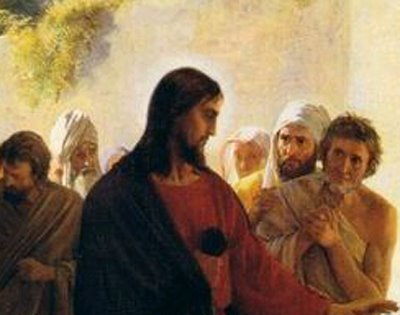 .... Through "Predestination Phase 1", God chooses certain people whom He will draw to Himself through Christ, but this also presents them with a formidable new challenge. Since all have sinned and fallen short of God’s glory, they are still reluctant to face the Light of Jesus because it would also mean facing the truth about their own sinfulness:
.... "For everyone practicing evil hates the light and does not come to the light, lest his deeds should be exposed. But he who does the truth comes to the light, that his deeds may be clearly seen, that they have been done in God."
(John 3:20-21)
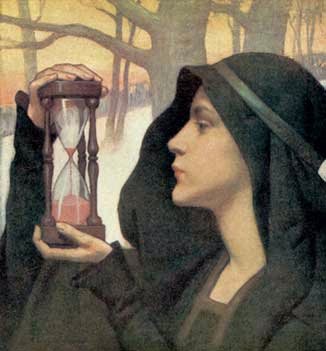 .... Yet the same passage offers them hope as God undertakes additional works for the purpose of drawing them near. This is "Predestination Phase 2". Because He prepares their hearts in this way, it will change them just enough to be able to face the light of Jesus without turning aside. In fact, when they eventually do come to Him, they'll look back on it all and see how His handiwork had helped prepared them for this hour.
 .... "However, when He, the Spirit of truth, has come, He will guide you into all truth . . . He will convict the world of sin, and of righteousness, and of judgment . . .."
(John 16:7-13 )
.... The answer came to me one day as I was reading John 1:6-7, and one of those ‘unthinkable thoughts’ popped into my head. The passage spoke of John the Baptist:
.... 'There was a man sent from God, whose name was John. This man came for a witness, to bear witness of the Light, that all through him might believe.’
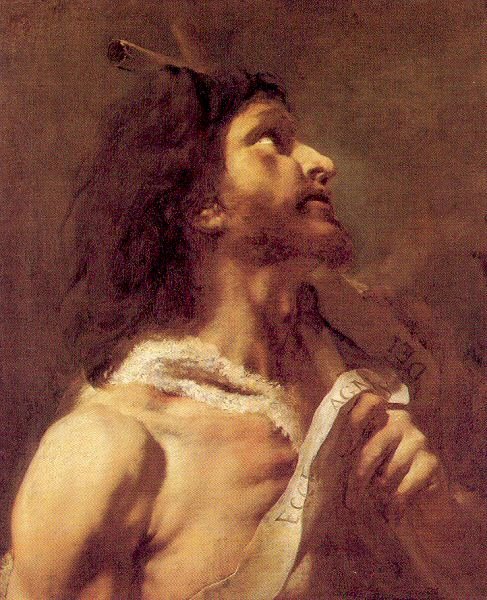 .... In those early days, before the Holy Spirit was given, people came to Jesus because of the ministry of John the Baptist. In other words, he was a forerunner of the Holy Spirit’s own ministry, a human representation of that ministry, which is an almost indescribable honor. And for this reason Jesus would say of John:
.... "For I say to you, among those born of women there is not a greater prophet than John the Baptist."
(Luke 7:28)
.... Of course, no one was actually saved through John’s ministry. Nor was that the intention in itself. But by following the ‘works of truth’ that he preached, the listener's hearts was reshaped just enough to be able to face the Light of Christ when He came. Thus, when John saw Jesus and cried out, "Behold, the Lamb of God!" Immediately they were able to follow Him. (John 1:36-37).
 ..... So how might this working appear in our own time, now that the Holy Spirit has suceeded John and brought the fullness of this intention in being, and perhaps even personalized it?
 .... "For I know that in me (that is, in my flesh) nothing good dwells; for to will is present with me, but how to perform what is good I do not find."
(Romans 7:18)
 .... Righteousness and sin will become subjects they think about too, and thoughts of an eventual judgment will sometimes worry them (John 16:8-11). But this will not occur with a sense of hopelessness. They will begin, instead, to feel the need for a change, with a growing sense of urgency. Often, during this period, they may try to feel better about themselves through avenues they already understand such as dieting, fitness clubs, trying to stop smoking, new forms of studies, or generous forms of social involvement. These and many other such initiatives may be telltale signs of the discomfort they are feeling due to the underlying conviction of sin in thier lives.
.... Can you think of occasions like those in your own life, before you came to the Lord? Or have you seen these signs in your family or friends? (If so, please add some examples in the 'comments' section). All of these deep, moody impressions are designed to get us thinking, and hopefully to respond, to prepare our hearts for receiving the gospel – which we will discuss in our next posting.
To proceed to the next lesson, click here
Daily Bible Reading: Mark 5
posted by loren at 10:59 AM


5 Comments:
This concept takes some thinking about, so allow me to give so examples from my own life, beginning with the importance of truth.
Before coming to the Lord, as a teenager, I had actually prided myself on being a convincing liar. (What a thing to take pride in!) But when the Lord began to move in my life, that changed, and truth became very important to me. I well recall an occasion, about a year and a half later, when someone accusing me of lying, and how hurt I felt by it. “When have I ever lied to you?” I protested; and only then did it occur to me that I really had been changing.
By then I was in the Navy, and I cussed like a sailor. But when this change began, I stopped using the Lord’s name in vain. Later, when I actually became a Christian, I had to learn a whole new list of adjectives and adverbs.
Another thing I tried to do, in those old Navy days, was to stop sinning on Sundays. That may sound funny to you, but you have to understand where I was coming from. I was trying to stop sinning in general, but found that I did not have the power to do so. The best I could do by will power was to behave for a while, and I chose Sundays because I knew Christians were meeting to honor the Lord on those days. I knew they knew Him, but I didn’t, so this was a further way of honoring God as best I could.
In those days I was stationed in the Azores, and I was walking with a friend to the base exchange. We were met along the way by an old Portugese woman, a widow, who carried a sign in English that explained she had no way of supporting herself, so could we please help out?
I was planning on spending about thirteen dollars, so I kept that much and gave her all the rest. About sixty dollars in all. For a Portugese widow in the 70's, that was a windfall. My friend saw what I was doing and decided to do the same.
The reason I gave so much was because I wanted, in some, way, to respond to God in honoring Him. And I thought that just maybe, if I gave to this widow, He would view it as a way of giving it to Him (Prov 14:31; 19:17). On the way back we ran across her again. I hadn’t spent the money after all, so I gave her the rest of it as well.
I also began to change in other ways. I started a very successful diet, and an exercise regiment. I also had a new appreciation for nature and animals.
Did any of these things save me? No, not at all. But they did incline my heart to God to prepare me. Later, when my time had truly come, I was able to muster the courage to face the Light because, in spite of my fears, I had built such a longing and trust that I yearned to find forgiveness with Him, and I was willing to surrender all in order to please Him.
By loren, at 6/15/2005 11:08 AM
Here’s some food for thought. Jesus said that he who does the truth comes to the light, in reference to certain ‘deeds’ which, in hindsight, we will clearly see as authored by God for the purpose of drawing us near. Because of these works we are able to face the light without turning away.
I think this throws a strictly practical challenge to the ‘just as I am’ doctrine. It’s not that it isn’t true, it’s just that it isn’t so. If anyone is able to respond, it is because God drew him (John 6:44). Even if they haven’t stopped to put their finger on this work, it’s there, if only they will stop to think about it.
By loren, at 6/15/2005 11:08 AM
This could be an article in itself, but it’s not really basic so it belongs here. Think of this whole process, in Predestination phases 1 and 2, as plowing a field to prepare it for planting. It’s breaking up the fallow ground (Hosea 10:12). It’s even, to some degree, plucking out some of the weeds.
When the gospel is later preached to this person, this preparation could well determine whether that seed was sown in good ground, stony ground, among thorns or by the wayside. I allude to the parable of the sower (Matt 13:18-23).
And here is an important point to consider, based on that same parable: Whatever the condition of the ground when they first received the seed, it determined what kind of a Christian they were from that point onward. Yikes! So it sounds like God views this preparation as an initial investment in a future harvest; by it, He wants to develop a good and noble heart in each of us.
For some of us this can be an alarming thought, because we might have to honestly admit that we were rather shallow in our conversion, or that we barely made the commitment because of worldly cares. But there is another parable that speaks to that (Luke 13:6-9). Even after we’ve been a Christian for a while, it is still possible to go back and work the soil in which we grow, that is, with the basic character of our hearts; to incline our hearts to more noble thoughts and improve the ground in which we grow, that we may become fruitful after all.
Before I was a Christian, I was really into the Lord of the Rings trilogy, and God used the noble sentiments of those books to cultivate a noble attitude in my heart. I think it helped create some good ground. However, if you’re already a Christian and you feel the need to go back and ‘work the ground’ some more, I suggest you spend some time meditating on the book of Proverbs (Prov 2:2-12; 4:20-22), especially in matching it to real life situations you’ve faced in the past, and taking it’s counsel to heart, to imagine how it might have turned out otherwise.
By loren, at 6/15/2005 11:09 AM
Predestination Phase 2 will bring us to the place of actually receiving Christ, in conjunction with hearing a gospel presentation. This is sometimes referred to as our ‘effectual calling’.
By loren, at 6/15/2005 11:09 AM
One last thought, about John the Baptist being the forerunner of the Holy Spirit's own ministry. For many of us, this one will be a shocker:
You may have heard the term ‘the Baptism of the Holy Spirit', and equated it to the Day of Pentecost and similar experiences. But that is actually not correct, because of a misnomer.
Actually what we saw at Pentecost was the baptism of Jesus Christ, who baptizes ‘with' the Holy Spirit or ‘in' the Holy Spirit. This is actually a very important distinction in many ways, which we will discuss in detail in a later posting.
But there is such a thing as the literal ‘baptism of the Holy Spirit' and it is the same baptism that John brought; it is water baptism:
"For by one Spirit we were all baptized into one body-- whether Jews or Greeks, whether slaves or free-- and have all been made to drink into one Spirit."
(1 Cor 12:13; see also Rom 6:3)
Do we all remember that John was filled with the Holy Spirit from his mother's womb (Lk 1:15) Ever wonder why that was?
Also, do we all remember that when Jesus was baptized, the Holy Spirit descended on Him in the bodily form of a dove, and remained on Him? (See John 3:5). So who presided over His baptism, besides John?
By loren, at 6/15/2005 11:41 AM
Post a Comment
<< Home