







True Representation - Part 1
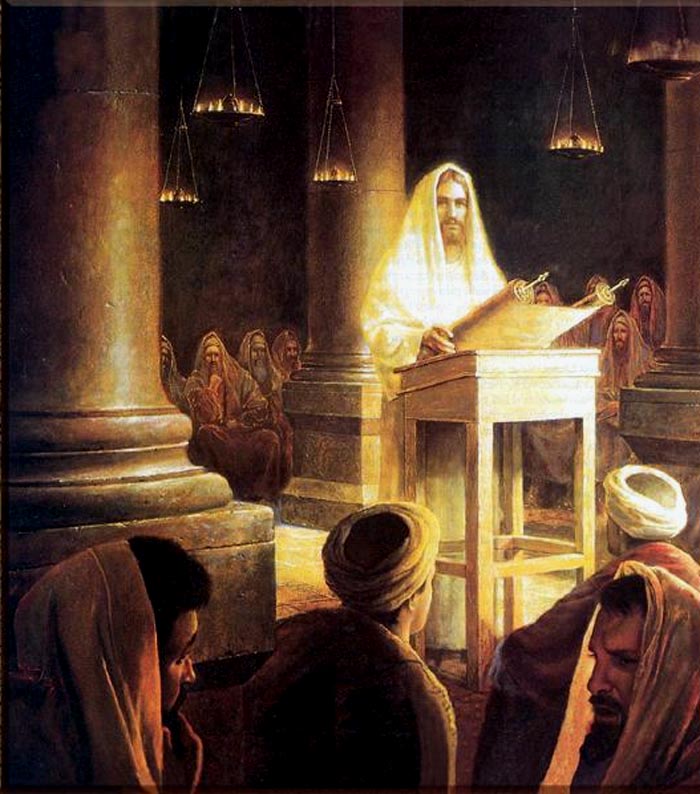
.... If you'll think about this for a moment, you’ll see the point quite clearly. While Jesus’ thoughts and His feelings were intangible, His words could be heard and His deeds could be seen, and that is much more tangible. Both His words and deeds bear the true image of the deeper, Divine nature that produced them, so they contain the perfect insights for becoming acquainted with Him.
.... Jesus anticipated this very approach when He told us that 'from the abundance of the heart the mouth speaks' (Luke 6:45). In other words, a person’s heart is truly expressed through their words – and this is especially true of Jesus Himself. In fact, the very first time this concept appeared in Scripture was in a prophecy that foretold Him:
.... "Then I said, ‘Behold, I come; in the scroll of the book it is written of Me. I delight to do Your will, O My God, and Your law is within My heart.’ I have proclaimed the good news of righteousness in the great congregation; indeed, I do not restrain My lips, O Lord, You Yourself know. I have not hidden Your righteousness within My heart; I have declared Your faithfulness and Your salvation; I have not concealed Your lovingkindness and Your truth from the great congregation."
(Psalm 40:7-10; Hebrews 10:5-7)
 .... Here is how this type of study might proceed. When Jesus spoke on any topic, we could learn of that topic, of course; but we could also employ a process of inversion. Through the inversion, His lessons would be thoughtfully pondered, retraced through His terms of thought, and back to the heavenly character that produced them: .
 .... "What is His heart like, and therefore He speaks as He does? Or what can be seen of His heart through His words?"
 .... As we focus our attention on Him in this way, and meditate prayerfully (which is the living part of this connection), a first impression will begin to emerge. This will be our initial ‘feel’ for His character in the particular incident we are exploring. The impression may seem intuitive at first, but it can be refined and improved through further meditation and discovery. For example, it may be thought- fully compared to other Scriptures that are similar in concept (1 Corinthians 2:13).
.... "For what man knows the things of a man except the spirit of the man which is in him? Even so no one knows the things of God except the Spirit of God."
(1 Corinthans 2:11)
 .... Through this whole process, including our meditation and prayer, the character of Christ will become much clearer to our mind, and will acquire further definition within our own spirit (2 Corinthians 3:18; Philippians 2:5). The more we think and pray about it, the more the character of Jesus will emerge as the true lesson. In fact, we will soon find that we have gone beyond merely learning lessons, and we are now ‘learning Christ’ in our study -- which is also the first step to becoming more like Him (see [Ephesians 4:20-24]; 1 John 3:2).
 .... "Take my yoke upon you, and learn of Me; for I am meek and lowly in heart: and ye shall find rest unto your souls."
(Matthew 11:29 KJV)
To proceed to the next lesson, click here
Daily Bible Reading: John 14
posted by loren at 1:26 AM


0 Comments:
Post a Comment
<< Home