







New Testament Prophets
.... This also means there are similarities and differences between the two perspectives. Neither is used to introduce ‘new truths' since God’s final and complete revelation of truth has been given to us through His Son Jesus (Hebrews 1:1; John 14:6). Instead, the spiritual gift of prophecy is used for edification, exhortation and comfort (1 Corinthians 14:3), and the actual ministry of a prophet speaks in terms of church direction – which may include foretelling futuristic events:
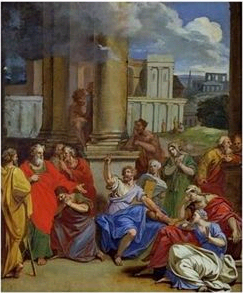
.... "And in these days prophets came from Jerusalem to Antioch. Then one of them, named Agabus, stood up and showed by the Spirit that there was going to be a great famine throughout all the world, which also happened in the days of Claudius Caesar. Then the disciples, each according to his ability, determined to send relief to the brethren dwelling in Judea."
(Acts 11:27-29)
 .... In this example, New Testament prophets served a very practical purpose. Through them, God revealed His plans to the church so they could prepare themselves and cooperate with His intentions; or as Paul would say, they used this prophecy to ‘wage the good warfare’ (1 Timothy 1:18). In this particular case, they used the information to make provisions for relief from famine, while there was still time to do so.
.
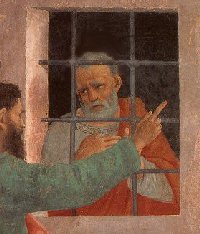
.... 'And as we stayed many days, a certain prophet named Agabus came down from Judea. When he had come to us, he took Paul's belt, bound his own hands and feet, and said, "Thus says the Holy Spirit, 'So shall the Jews at Jerusalem bind the man who owns this belt, and deliver him into the hands of the Gentiles.'" Now when we heard these things, both we and those from that place pleaded with him not to go up to Jerusalem. Then Paul answered, "What do you mean by weeping and breaking my heart? For I am ready not only to be bound, but also to die at Jerusalem for the name of the Lord Jesus." So when he would not be persuaded, we ceased, saying, "The will of the Lord be done".'
(Acts 21:10-14)
 .... When it comes to understanding personal direction through prophecy, this passage can be very instructive. First, let’s examine a check and balance system that is evidenced in the background. Before hearing this prophecy from Agabus, Paul had heard something similar from the Lord on his own (Acts 20:22-24), and he had even heard the same through other prophets (Acts 21:4). So when prophecy is involved in offering personal direction, it will be repetitive and it will come from different sources as a form of verification:
"By the mouth of two or three witnesses every word shall be estabished."
.
 .... And here is a second vital lesson. In this example, almost everyone who overheard the prophecy jumped to a conclusion about it. They considered it a warning, and concluded that Paul should avoid this journey at all costs. Yet Paul himself understood otherwise: that whatever pain it might bring him, it was a part of his calling and he was supposed to go on this journey (see Acts 9:16; 23:11).
 .... Therefore, using prophecy to ‘wage the good warfare’ does not mean: "Thanks for the info, Lord; we’ll take it from here." Because the quesiton of application remains, as we could very well misapply what we've heard:
.... "Are you so foolish? having begun in the Spirit, are you now being made perfect through the flesh?"(Galatians 3:3)
To proceed to the next lesson, click here
Daily Bible Reading: Acts 11
posted by loren at 12:05 AM


2 Comments:
In other New Testament Passages, prophets double in the role of teachers (Acts 13:1) and may also exhort the people (Acts 15:32). They are second in rank within the church, behind apostles (1 Cor 12:28). It was common for prophets who served well in that capacity to later become apostles (Acts 13:2; 15:34), so we might expect such flexibility from them.
FYI., Modern day apostles are usually called missionaries: those who start new churches, usually in areas where churches have not reached before.
By loren, at 9/23/2005 12:30 AM
Hi Kurt,
Basically: here's how I think it went:
"Paul, we've heard from the Spirit that chains and tribulations await you in Jerusalem. You're heading for trouble. Don't go!"
The information in that statement would have been true, and would have come from the Holy Spirit. Yet the application was their own conclusion.
Remember that Paul himself was 'bound in the spirit' to go to Jerusalem (Acts 20:22). He heard this first hand from God. Their input was second hand, and it had some human reasoning mixed in - which is not uncommon in prophecy today. That's why it has to be judged. And when this occurs one must pick out the moths, so to speak. That's why Paul told us:
"Do not despise prophecies. Test all things; hold fast what is good."
(1Thes 5:19-21)
Remember that Paul heard this same warning from other prophets as well, and everyone tried to disuade him. But he knew that in spite of their interpretation, he was supposed to go. In the end, Jesus Himself settled this matter and proved his conclusion true:
"But the following night the Lord stood by him and said, "Be of good cheer, Paul; for as you have testified for Me in Jerusalem, so you must also bear witness at Rome."
(Acts 23:11)
Jesus equated the two occasions for testimony and called them a 'must'. So Paul did turn out to have the correct interpretaton. This leads to another principle:
When we hear the Lord telling us to do something, we are the ones who must act on it. God may use others to prophesy, and we may use this prophecy to further explore our own understanding as we decide on the application, but the final outcome is our own task.
Consider the story of the man of God from Judah, and the prophet from Samaria (1 Kings 13:15-22). We must never trust that others have heard God more clearly on our behalf, than we have heard Him for ourselves.
I hope that is helpful.
By loren, at 9/23/2005 1:38 PM
Post a Comment
<< Home