






The Apostle’s Curriculum

...."Then He appointed twelve, that they might be with Him and that He might send them out to preach."
(Mark 3:14)
,... "Ought not the Christ to have suffered these things and to enter into His glory?" And beginning at Moses and all the Prophets, He expounded to them in all the Scriptures the things concerning Himself."
(Luke 24:26-27)
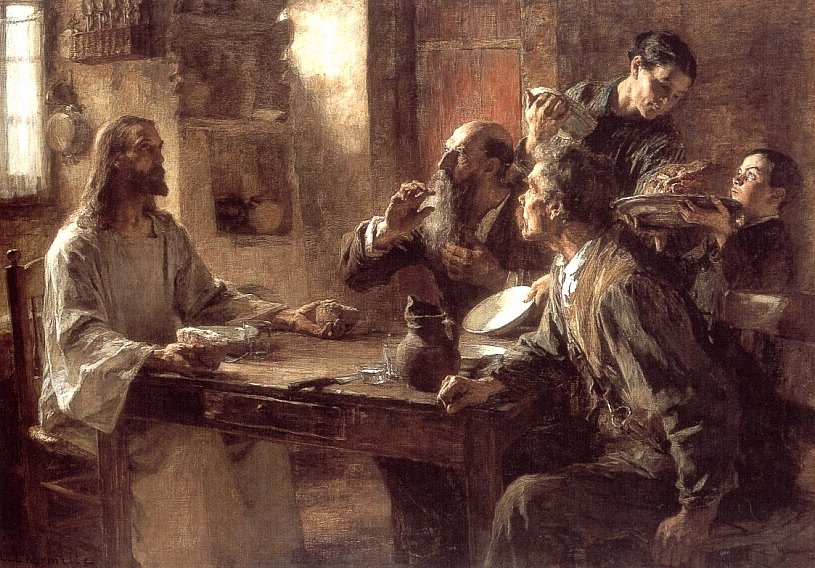 .... After the lessons of the gospel were complete, Jesus showed the apostles how His sufferings, death and resur- rection had fulfilled the Old Testament prophecy. To present the same material today in an easy-to-understand format, a special break-out module has been prepared for your convenience (look in the right-hand column of this page). So after you've finished reading the four gospels, we suggest spending a few days studying The Sufferings and the Glory module, and allowing the Lord to reiterate the gospel message to you as seen through the eyes of the Old Testament prophets:
.... Then He said to them, "These are the words which I spoke to you while I was still with you, that all things must be fulfilled which were written in the Law of Moses and the Prophets and the Psalms concerning Me." And He opened their understanding, that they might comprehend the Scriptures.
(Luke 24:44-45)
 .... Next, the apostle's curriculum would include your returning to the Book of Acts, where the Lord took the apostles next. We suggest that you continue reading from there, and onward through the rest of the New Testament, keeping the same pace of two chapters per day. Then return to the four gospels and the Book of Acts and read them each a second time.
 .... Be diligent to present yourself approved to God, a worker who does not need to be ashamed, rightly dividing the word of truth.
(2 Timothy 2:15)
 .... But remember that reading is only the academic part of your study. In life itself you must emulate the apostles again by using this information to connect with Jesus in your daily trials (Luke 22:28). As often as possible throughout the day, meditate on the things you’ve been reading and try to pray about them. As you come into new situations, you'll find the Holy Spirit bringing those same Scriptures to your mind and showing you how to apply them (John 14:23; 16:13). But He also wants you to become acquainted with Jesus through everything He is teaching you; He wants to reveal how Jesus thinks in those same situations, and His sense of character, so you can be of the same heart and mind as He (John 15:26-27; Colossians 3:10).
.... "Let this mind be in you which was also in Christ Jesus."
(Philippians 2:5)
.... In the long run, as your knowledge of the Bible expands, you’ll be able to prayerfully compare Scriptures with other Scriptures. The Holy Spirit will use this approach to fine tune the best counsel for each of your situations, and He will show you the heart and mind of Christ even more clearly at the same time (1 Corinthians 2:13,16; John 15:26)..... ". . . that you put off, concerning your former conduct, the old man which grows corrupt according to the deceitful lusts, and be renewed in the spirit of your mind . . ."(Ephesians 4:22-23)
.... Finally, as you bring your Scriptural insights into discussions with other Christians, we will all grow in Christ together, in edification and in love for one another.
For the next lesson, click here
posted by loren at 12:14 PM


8 Comments:
Once you’ve finished reading the gospels twice each, my suggestion is that you read the Book of Acts twice, since that is where Jesus brought the apostles next. Then continue reading straight through until you’ve completed the rest of the New Testament (once). The idea is to do a speed-read to gather Scriptural information, which the Holy Spirit can draw upon, bring to your remembrance, and illuminate at key times in the future, when you are on a position to understand some of those things better (John 14:26).
After all this, start at the beginning, in Genesis, and read the entire Bible straight through. As you are doing this, pray and ask the Lord to show you how the Old Testament foretold Jesus. Prayer is important because you won’t be able to find this prophecy without it (Luke 24:44,45).
By loren, at 4/04/2005 12:24 PM
As an alternate plan, keep the same pace of two chapters a day, but read straight through the new testament from Matthew to the end of Revelation. When you have finished, return to the four gospels and the book of Acts and read them each a second time. Then go back and start at the beginning, with the Book of Genesis, and read straight through the entire Bible again.
Occasionally, I’ve heard the story of someone who came to the Lord in an isolated way, and they simply began to study the Bible on their own, as they felt the Lord leading them. In those stories, a similar ‘curriculum’ spontaneously emerged. There was an amazing emphasis on reading the four gospels, and sometimes the Book of Acts, twice apiece. The most familiar example would be when Billy Graham decided to get serious with the Lord, but this also describes my own conversion experience and I have heard of a similar experiences from others.
By the way, in those days I read at least one chapter a day, but I averaged four.
By loren, at 4/04/2005 12:26 PM
Loren,
I find it helpful in my reading of the word to pray for God to speak to me as I read. God honors a teachable and humble heart.
By Berry, at 4/05/2005 7:34 PM
Hi Berry,
Something that clicked whenI read your remark is that 'faith comes by hearing' and 'My sheep know My voice'. When I read the Bible, it's like Jesus is reading it to me, like you said; and when I pray and He speaks to me, it's the same voice. Interesting.
By loren, at 4/05/2005 10:26 PM
The next logical question may pertain to Bible versions. The Bible was originally written in Hebrew (OT) and Greek (NT), then translated into English. Anyone who has worked with translation knows that languages don’t always match each other perfectly, which requires some judgment calls in how to best render a passage in the new language. This has resulted in different translations of the Bible.
The version I recommend is the New King James Bible. I recommend it because it maintains a lyrical quality of translation, and this is closer to a spiritual flow (see 1 Chr 25:3; 2 Kin 3:15). It is also one of the most accurate, precise translations you can obtain. Of the major versions, only the New American Standard is recognized as being a bit more literal in translation. Thsi blog site will use the NKJB unless otherwise noted.
On the other hand, I recommend you do not purchase the New International Version, because it is not a true translation at all. Rather, it is a dynamic equivalency. This means that the translators took the concept of each verse and tried to render it in English conceptually, rather than literally. But this also allowed their own subjectivity to become involved.
For example, in foretelling Christ, Psalm 2:7 (quoted four times in the NT) says: "I will declare the decree: the LORD has said to Me, 'You are My Son, today I have begotten You’.” but the NIV renders it thus: ‘I will proclaim the decree of the LORD: He said to me, "You are my Son; today I have become your Father”.’
The true concept is: ‘This is what I have done, and how it carries forward to effect You.’ but their concept is, ‘This is what I have done, and how it reflects back upon Myself.’ And it creates some major problems. For example, Today God became the Father of Jesus? As if to say He was not His father until that day? This is taught by some of the cults, so they are probably delighted to see it.
Also, the fact that Jesus was ‘begotten’ by God is a major doctrine, but they have removed this reference.
From this and other passages in the NIV, I see a spirit of adventurism in the translation work, to approach things from another perspective, rather than a faithfulness to the approach and perspective authored by God. Side-by-side versions of the Bible are available, that show you how each major translation renders a passage in question; and when I look at them, I see that the NIV is always one step out of step with the others.
By the way, I’ve gotten people mad at me in the past for saying this, but when they checked it out themselves, they ended up agreeing with me.
By loren, at 4/06/2005 2:41 PM
When I was a Protestant, the New King James Version was my favourite. If they published a Catholic version (you know, with all the books ;) ) I'd probably go back to it.
In the meantime, I was using the Revised Standard Version online, and was recently given a New Jerusalem Bible. I believe the NJB is somewhat dynamic equivalency, but for the most part what I've read has been solid. If you have any other Catholic readers, I seriously warn them away from the New American Bible (not to be confused with your recommened New American Standard). The NAB uses some rather liberal scholarship and tinkers with the text in unwarranted and unjustified ways. I was horrified when I first was given one.
By Anonymous, at 8/03/2005 3:33 PM
Hi Gregory,
I'm not totally sure of this, but I think there might be a NKJV in a Catholic Bible. Try the Thomas Nelson website and see.
By loren, at 8/03/2005 5:41 PM
Hi Loren,
Just read through this post and wanted to let you know I think there was a small error in your paragraph. You mentioned the list of modules on the left column, but there is only the 'welcome' paragraph... did you mean to say the right column? (instead of the 'other-right' ;-)
By Anonymous, at 7/18/2006 1:33 PM
Post a Comment
<< Home